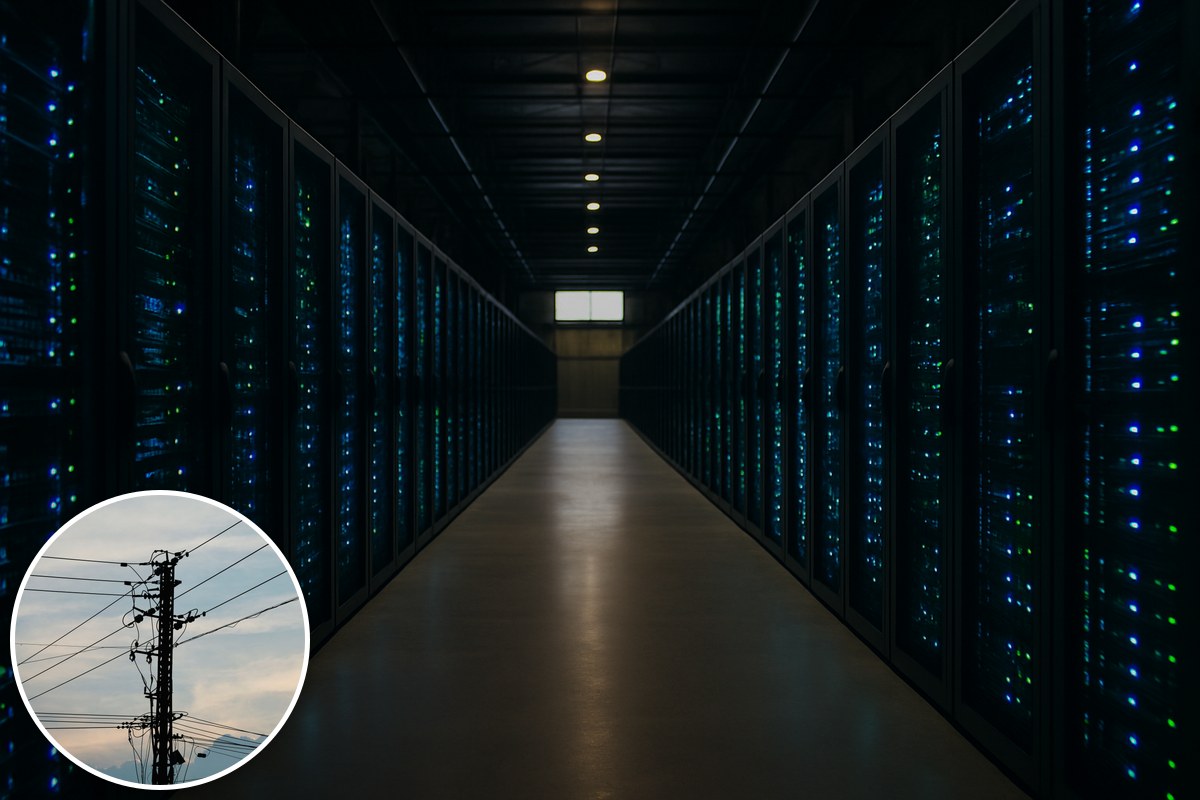
A paddock in the heart of Queensland's coal seam gas country, 250 kilometres west of Brisbane, is usually home to cattle. Under a development application now before the Western Downs Regional Council, it could instead host a hyper-scale data centre with the potential to increase Queensland's daily electricity use by 25 per cent. Singapore-based developer Zerra DC's proposed Western Downs Digital Park — a $31.9 billion project first revealed in August — is currently the largest proposed data centre in Australia.
The numbers are hard to fathom. Total peak capacity would be 2.16 gigawatts, a power draw comparable to 1.5 million average Australian households. At the end of its four-phase rollout the park could draw about 47 gigawatt-hours a day, against Queensland's average daily consumption of 170. "Getting this wrong will impact grid stability and cost to consumers," said Andreas Helwig, an electro-mechanical engineer and associate professor at the University of Southern Queensland, who called the project an "enormous amount of energy" and a possible test case for how the AI boom gets powered.
The 725-hectare site near Dalby sits beside the Wambo Cattle Company's 24,000-head feedlot, and Zerra DC says it is well positioned: three gas-fired power stations nearby, solar and wind farms in the district, and a major substation described as a "critical electrical junction" sending power to south-east Queensland and New South Wales. The developer says the park would plug directly into that substation rather than the local distribution network serving surrounding towns. According to planning documents reported by The Urban Developer, the fully air-cooled facility would need about 522 kilolitres of water a day during construction and about 16.5 kilolitres daily once running, with rainwater harvesting the preferred supply.
Where that power comes from is now a live political fight. The federal government wants renewables as the national standard for data centres, while Queensland and the Northern Territory have pushed to use gas or coal — and Premier David Crisafulli has lobbied for an "energy-agnostic" approach, arguing new generation built alongside the projects could cut prices. "By virtue of doing that, it can in fact help us drive down power prices," he said during a recent US trip meeting AI companies.
Tim Buckley, director of think tank Climate Energy Finance, said the surge in demand would have to be matched by new generation — investment that could transform regional areas. "The beauty of the land grab in the data centre gold rush that's underway right now is that capital is pouring in," he said. But he argued gas should play only an "important small and declining" backup role: "We need to embrace these industries of the future, but we've got to make sure they're not powered by industries of last century."
On the ground, the reception is wary as well as welcoming. Cotton and grain grower Liza Balmain, a spokesperson for the anti-gas group Save Our Darling Downs an hour's drive south, said many of her neighbours had lost farming viability to coal seam gas drilling's impact on land and groundwater — and while she is not opposed to data centres, she wants guidelines on what natural resources they would require. "As we've seen with coal seam gas, it can fracture communities," she said. "You have to question what is the long-term legacy benefits for the communities that are being expected to absorb those impacts."
Western Downs mayor Andrew Smith calls his region the "energy capital of Queensland" and frames the project as the dawn of a new era, with conversations about community benefit agreements already underway. "We've got a perfect mix of coexistence of ag and energy," he said. Nothing is settled yet: the application could take years to approve, the build another four to six years — and his councillors will only vote once the planning team finishes its assessment.