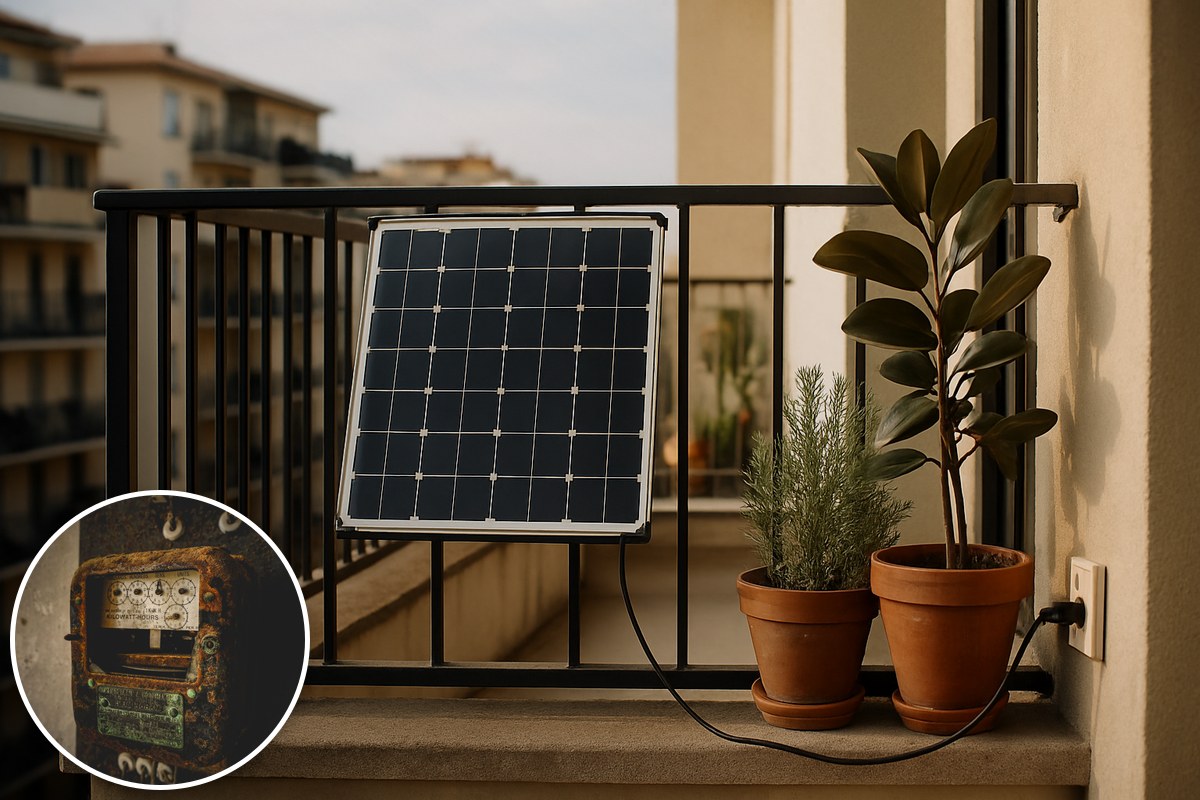
Australia could soon follow Germany and the United Kingdom in lifting its ban on plug-in solar panels and batteries, after the nation's energy ministers agreed to explore pathways to support the "safe deployment" of the technology. The change would open solar power to millions of apartment dwellers and renters for the first time — the systems can technically be sold in Australia today, but not legally plugged in and used.
So-called balcony solar is exactly what it sounds like: a compact panel hung off a balcony rail or stood in a backyard, feeding power into the home through an inverter and a standard plug — no electrician required. Overseas, the systems typically produce 600 to 800 watts and cost up to $1,300, and renters can take them along when they move. Germany is the world leader, with an estimated one in ten households running a system; the UK legalised them last month, and New Zealand has flagged plans to follow within 12 months.
Federal Energy Minister Chris Bowen said a third of Australians have solar on their roof, making the technology "more popular than the backyard pool". "Now we're taking the next step, by looking at how even more Australians can take advantage of free, abundant sunshine to cut their energy bills — even if they don't have a roof," he said. "All state and territory ministers are on board and will work with the Commonwealth to look at how plug-in solar and batteries can work in Australia to give apartment dwellers more control over their energy bills." The ministerial council's communique (document) commits governments to identify measures enabling safe use and report back on next steps by the end of the year.
The stakes are largest for the more than 30 per cent of Australians who rent — almost 3 million households. Heidi Lee Douglas, chief executive of Solar Citizens, the community organisation that has campaigned for legalisation, called the commitment "great news for more than a third of Australians who rent or live in apartments, and also for low-income households". Her organisation wants a firm timeline set at the next energy ministers meeting in December, and for the systems to be legal by July next year. "The average plug-in solar panel will allow you to save about $300-$400 a year, and plug-in batteries will easily double that," she said, with some households expected to save up to $1,000 a year. Experts quoted by the ABC suggest the systems pay for themselves in four to ten years.
The industry is cheering too. The Smart Energy Council called the agreement historic, with chief executive David McElrea noting that "around 30 per cent of Australian households, including renters and people living in apartments or medium-density housing, are currently locked out of traditional rooftop solar and wall-mounted batteries. Enabling safe plug-in CER devices is a game-changer that will finally make clean, cheap energy accessible to millions more Australians."
There are still hurdles before a panel can legally dangle off a Queensland balcony: safety standards need to be settled before products hit the market, governments are yet to say whether subsidies or rebates are on the table, and landlords and body corporates will need to be brought along. Craig Morris, executive director of the German Plug-In Solar Association, said Australia could use Germany's safety standards as a starting point — and noted that in Germany, tenants must ask permission but landlords need a good reason, such as planned facade renovations, to refuse.
Mr Morris said the bigger prize is what plugged-in batteries could do for everyone — not just their owners. "The batteries would charge and discharge not in order to optimise our consumption of the solar power we generate, but to optimise operation of the local grid," he said. "And this can save money across the board, across the country for everyone, even if you don't have a system, because we're going to optimise the usage of these public power lines."