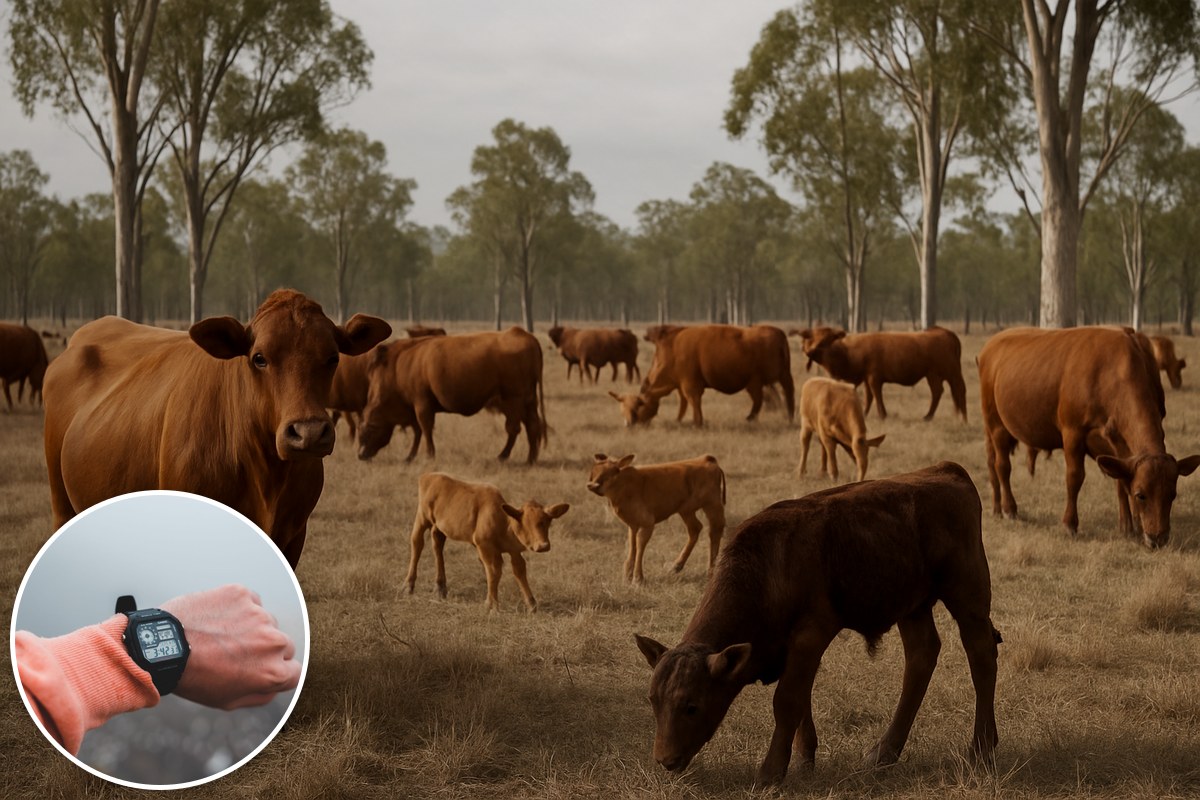
Researchers monitoring 100 cows at Belmont Station near Rockhampton are using movement sensors to investigate how maternal behaviour affects calf survival, with fresh reporting highlighting a calf that nursed from two cows. ABC reported on Monday (12 October) that senior researcher Anita Chang had monitored the herd for more than a year as part of CQUniversity's ongoing Mooternal project.
The five-year project is led by CQUniversity, in partnership with the Northern Territory Department of Agriculture and Fisheries and with funding from Meat & Livestock Australia. It is developing and testing ways to interpret sensor data, with the aim of producing practical tools to help cattle producers understand and manage calf loss.
Ear tags and GPS collars record movement and behaviours including grazing, ruminating and interactions within the herd, according to ABC. The work extends to Manbulloo Station near Katherine, where Christie Pearson has been observing 140 cows. The devices let researchers follow activity across grazing properties where watching individual animals continuously would be difficult.
Chang told ABC that a calf at Belmont had been cross-suckling with two separate cows. In its earlier account of the research, CQUniversity described cross-mothering as an unexpected finding, with cows investing in calves other than their own and allowing multiple calves to nurse. The university says that raises questions about the influence of wider herd dynamics and social interactions on survival.
The FutureBeef project description identifies reducing calf loss as a northern beef industry research priority. It says maternal investment remains poorly understood in extensive grazing environments, and that Mooternal is examining both calf survival and productivity to identify opportunities for management interventions.
CQUniversity says the first round of trials took place during the 2025/26 calving season at AgForce's Belmont Research Station and Manbulloo Station. Cows and calves wore GPS and accelerometer sensors to capture their movements and interactions. The university notes that some producers handle cattle only once or twice a year, leaving much of their day-to-day behaviour unseen between those observations.
The researchers are developing algorithms to detect when calf losses occur and identify behavioural patterns and environmental factors that may contribute. CQUniversity describes the early results as promising and says the next phase will validate the technology across a wider range of conditions, including different cattle breeds, environments and management systems.
Further trials are planned at Belmont and Manbulloo during the 2026-27 calving season, before testing on commercial properties in 2027-28 and 2028-29, according to the university. Its long-term aim is to incorporate the algorithms into commercially available livestock monitoring technology, giving producers more information about when and where calf losses occur and helping them make better-informed herd management decisions.