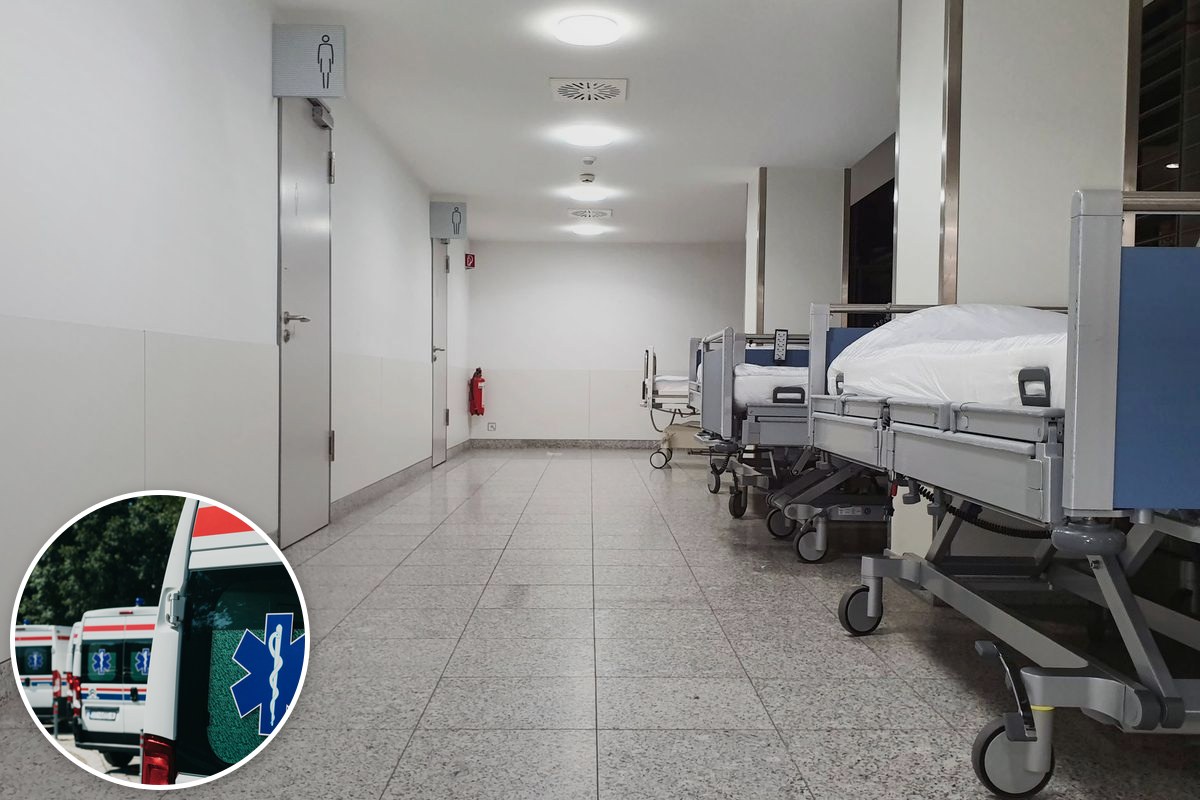
More than 1,400 people were lying in Queensland public hospital beds in April who no longer needed to be there — medically ready to leave, waiting on an aged care or NDIS place that did not exist, the ABC reported. A year earlier the figure was just over 1,100. The reported estimate of what the blockage costs Queensland: more than $3 million a day.
Around three-quarters of the cohort — labelled "stranded Australians" — are older patients. Health Minister Tim Nicholls says the extremes are stark: one patient has been waiting for discharge for more than 1,000 days, by his account, and another 15 people for more than 700.
The number behind the number
The figure Nicholls leans on hardest is the supply side. In the year to June 2025, Queensland's residential aged care system grew by a net 26 beds. "This is a dismal amount. Only a 0.06 per cent actual increase in the number of beds available in Queensland," he said. Aged care funding sits with the federal government, and he has made the blame explicit ahead of a meeting of state and territory health ministers on Friday: "We're meeting our responsibilities. It's time for the Commonwealth to meet their responsibilities, and until they do, we'll continue to hold them accountable." Queensland, he claims, is "ground zero" for the problem.
The Commonwealth's account cuts the other way. A spokesperson said the states themselves identified older long-stay patients as the biggest hospital-system issue during funding negotiations — and that the federal government "proposed a ringfenced $2 billion for aged care services as part of the agreement, but states and territories rejected that offer, instead choosing to direct that funding into their hospital systems". The two versions of who walked away from what are not reconciled in the ABC's report.
What it does to everyone else
The Australian Medical Association Queensland's president, Associate Professor Erica Gannon, describes a ripple that starts at the front door: "There is a flow-on effect to those patients who are needing to come in through frontline services in our emergency departments. That will impact on ramping, and the care needs of ongoing ED patients."
And it is not cost-free for the people in the beds. "It is certainly distressing for those patients who are in hospital for a prolonged period of time," Gannon said. "It can be a noisy environment and distressing for those dementia patients, not to mention their exposure to hospital-acquired infections."
Shadow Attorney-General Meaghan Scanlon said she would encourage federal investment in aged care but in partnership with the state — and turned the pressure back on the government: "They've delayed hospitals all across the state. They need to take responsibility as well. At the moment, they're prioritising the construction of a stadium over hospitals." The stadium line is a political jab at 2032 spending priorities, and it signals where the state-level fight over this issue goes next.
The dispute lands on Friday's health ministers' meeting, where the issue is expected to sit at the top of the agenda. The national picture the ministers will be arguing over is public: the AIHW's aged care data portal tracks places, providers and wait times across the system. What it cannot show is the thing every party in this story agrees on, whatever they dispute about money: 1,400 people are in the wrong beds, and the number is moving the wrong way.