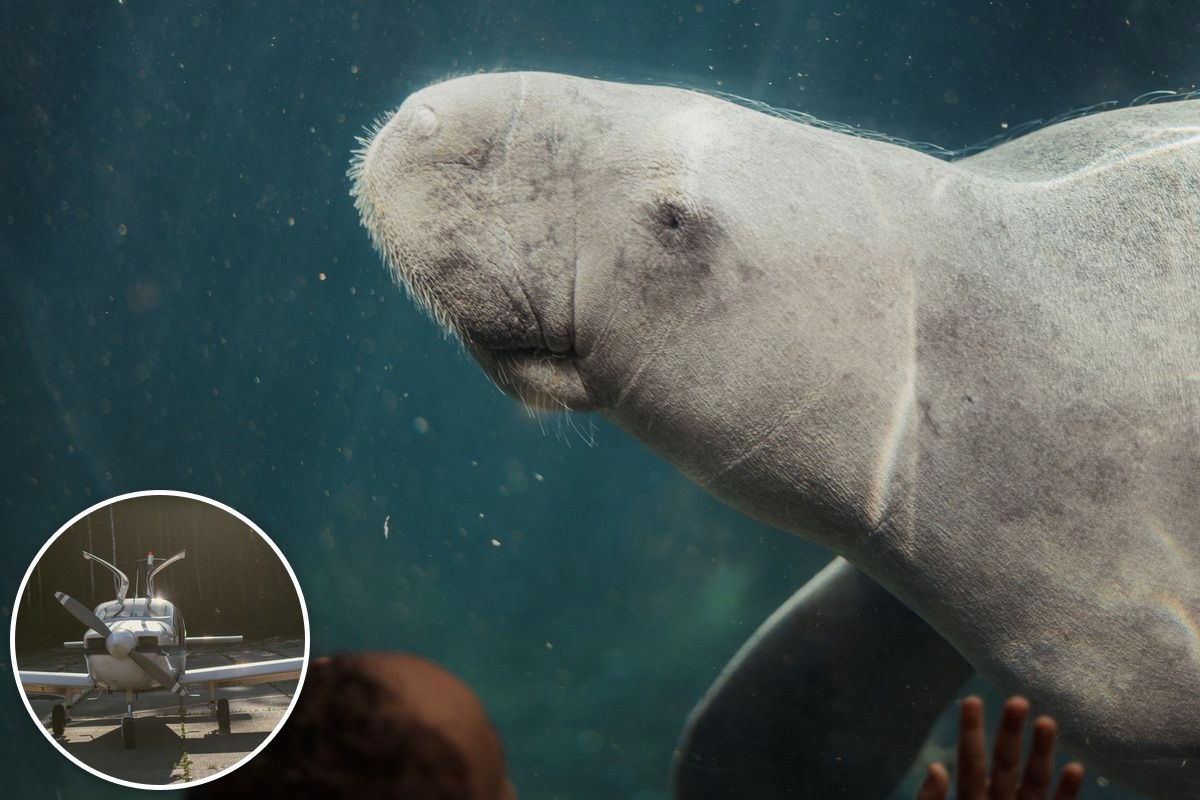
One of the world's most important dugong populations has halved. Aerial surveys of the Gulf of Carpentaria — home to the second-largest dugong population on Earth after the Torres Strait — put the estimate at about 5,000 animals in 2025, down from about 10,000 in 2007, the ABC reported.
"We have a reduction by half of population size," said James Cook University researcher Chris Cleguer, whose team flew the surveys with Charles Darwin University scientists and Indigenous ranger groups. The raw counts behind the estimates: 305 dugongs spotted across the gulf in 2025 against 471 in 2007 — and the sharpest fall came in Queensland waters, where 63 animals were recorded compared with 231 two decades ago.
Dugongs are classified as vulnerable on Queensland's threatened species list and carry the same listing internationally. The survey numbers were converted to population estimates using nationally recognised statistical methods.
An 18-year blind spot
The awkward truth inside the finding is the gap: 18 years passed between surveys, and nothing was measured in between. "It's been really hard to understand what could have happened during that time gap," Cleguer said. "The analysis is ongoing. We still need to add more data to our analysis, but the numbers are concerning."
The recovery mathematics are unforgiving. "They're long-lived animals," said Charles Darwin University marine scientist Rachel Groom. "They're slow to breed and reach maturity, so that shift or decline in the population we're looking at years to recover." And the recent signs are not reassuring: "In the last couple of weeks we've had 11 dugongs wash up dead in the gulf which has further increased concerns of what's going on." People have also begun reporting green turtles with black fat — a sign, she said, of starvation.
The seagrass underneath it all
No cause has been established, and the researchers are explicit about that. What they can point to is the state of the seagrass meadows dugongs depend on for all of their food. JCU scientist Alex Carter said cyclones, heavy rainfall pushing mud into the gulf, and long windy periods churning up sediment have all cut the light seagrass needs — and the meadows have also been exposed to elevated ocean temperatures in recent years.
The rangers who work these waters put it more simply. "We noticed the depletion of the seagrass. I mean, if there's no seagrass, there's no dugongs," said Tommy Wilson, coordinator of the Queensland Wellesley Island Rangers. "It's concerning to us. They play a significant role culturally to us."
The research partners also suspect commercial gill-net fishing is taking a toll. Queensland and the Northern Territory have already stopped gill-netting in parts of the gulf, and the Territory has promised a total ban by the end of next year — not soon enough for Li-Anthawirriyarra Sea Ranger Unit ranger Shaun Evans, who wants netting stopped now: "Senior elders had concerns about us using nets. So we'd like all netting in the area to be stopped."
What everyone in the story agrees on is the fix for the blind spot itself. The rangers are calling for funding from all levels of government for regular dugong and seagrass surveys, so the next data point does not arrive 18 years late. The federal and Queensland governments helped fund this round of research; whether the monitoring becomes routine is now the live question.