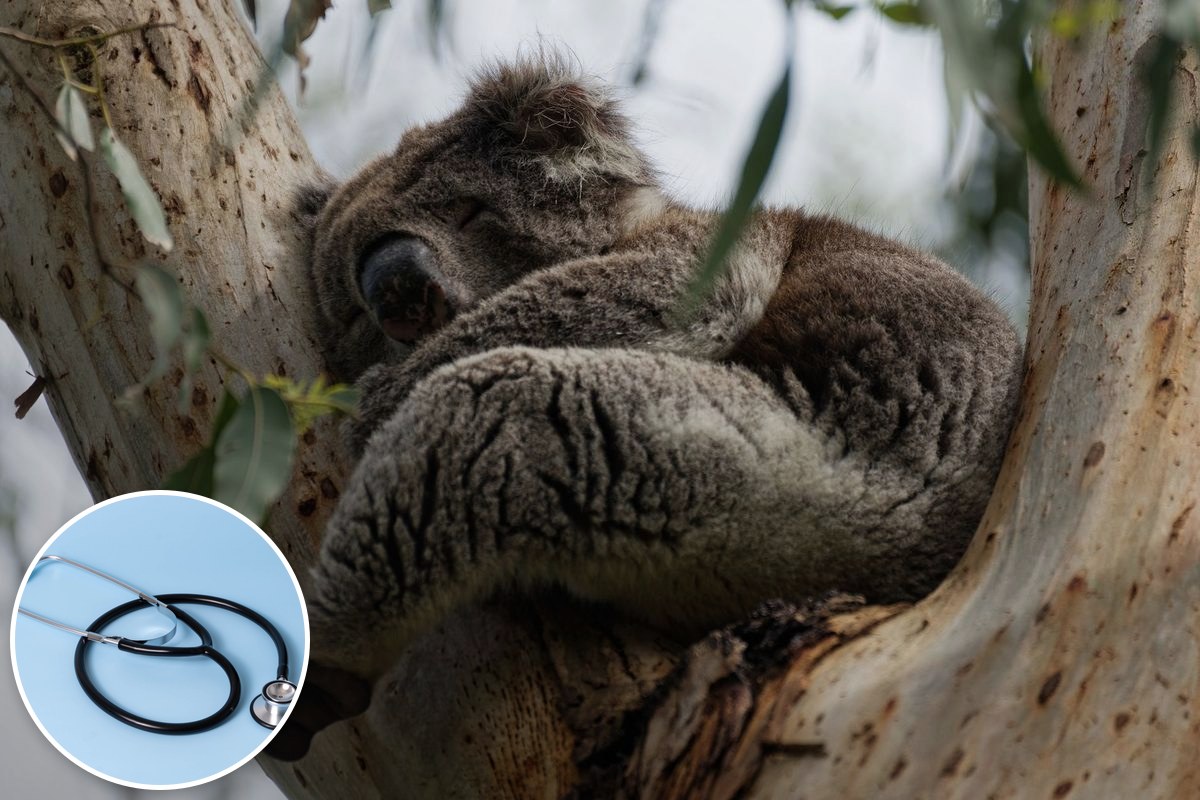
A new wildlife charity is treating and releasing rehabilitated koalas on North Stradbroke Island rather than sending them on a one-way trip to the mainland, the ABC reported on Monday (23 November). The charity says it needs more volunteers.
The Minjerribah Wildlife Veterinary and Conservation Foundation, a not-for-profit foundation established in January 2026, works in partnership with Straddie Vet. It supports a 24/7 wildlife triage and emergency care service that Straddie Vet established in September 2025, and says that with the granting of a specialist species rehabilitation permit for koalas, veterinary-led rehabilitation and on-island release of koalas is now possible.
"Being able to keep those koalas on island is a real game changer for us," said Jade Patterson, who owns the Straddie Vet clinic and, the ABC reported, founded the charity.
Koalas Stay on the Island
The ABC reported that injured or sick koalas were previously sent to the mainland for care, but could not return, due to the risk of them bringing diseases to the island. Koalas released outside of their home range have low survival rates.
"We don't fully understand the reason for that. It could be to do with the food source that they eat," Dr Patterson said. "There's been talk of it being related to their microbiome."
The island's koalas are Australia's only naturally occurring island koalas, isolated for about 8,000 years, with low levels of Chlamydia, a disease devastating many mainland populations, WWF-Australia has said.
One of the centre's current patients is a joey separated from her mother by a couple of aggressive males competing to mate. Wildlife rescue volunteers dropped her off at the island's only vet clinic, where she was placed in the care of vet Thalita Calvi.
"She was extremely tired when she arrived," Dr Calvi said. "She's slowly putting weight on, and getting her strength back. She is quite strong-willed."
Elder Auntie Mary Burgess told the ABC koalas are culturally important to the Quandamooka people, who found it upsetting when the endangered marsupials were not allowed to return to country.
"I think it's wonderful that our local vet, Jade, has set up that process for our koalas. She's only just recently released two babies that were abandoned by the mother," she said.
Volunteers and Research
The ABC reported there are too many animals needing care and not enough time or resources to give them what they need.
"It costs a lot of money to look after these animals and it takes up mostly an inordinate amount of time and we do that all at the moment on a volunteer basis," Dr Patterson said.
She recently ran a wildlife carer workshop to recruit potential volunteers. "We would like the community to have the training, the expertise, the equipment and the guidance to be able to take those animals, care for them under our supervision and when they're ready release them," she said.
The foundation also runs A Week for Wildlife, asking island holiday-home owners to pledge the equivalent of one week's rental income each year to help support veterinary care, rehabilitation and conservation. It says foundation funds do not contribute to the general operating costs of Straddie Vet.
With more volunteers sharing the load, Dr Patterson hopes to focus on learning more about Straddie's unique koala population, which she described as "the really good stuff, which is the research and the education".