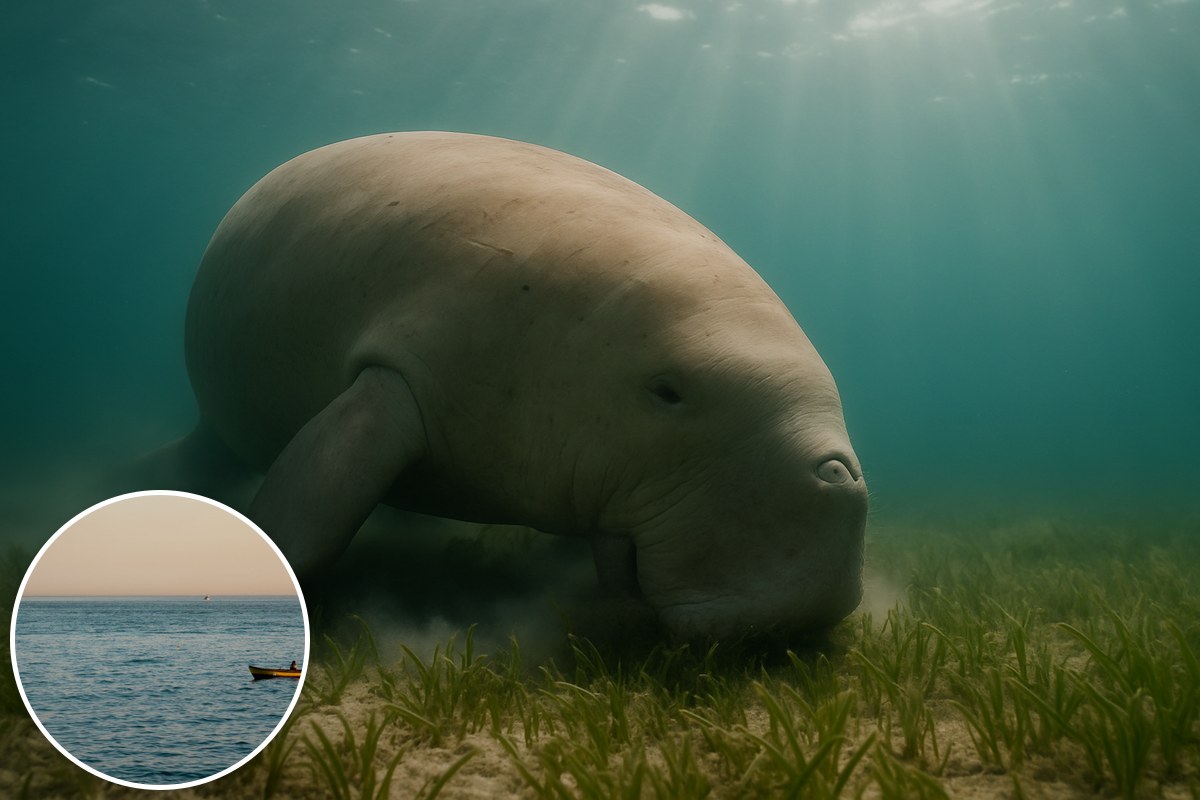
There is a rare kind of good news moving through the seagrass meadows north of Brisbane. A new report from James Cook University and TropWATER, released last month, has found the dugong population of Hervey Bay and the Great Sandy Strait slowly growing — four years after major flooding decimated the seagrass the vulnerable species depends on, and after a run of grim population news elsewhere along the Queensland coast.
The 2024 flights were the researchers' second round of aerial surveys over the bay and strait, following the baseline survey flown in 2022, and the raw numbers moved the right way: about 109 dugongs counted, up from 103. Just as encouraging was where they were — in 2022 the animals huddled mainly in the central portion off Hervey Bay, but by 2024 they had spread south towards the Great Sandy Strait. "It is likely the result of seagrass on its way to recovery in these inshore areas," JCU principal research officer Christophe Cleguer said. The raw tallies understate the true population: observers apply correction factors because, as Dr Cleguer put it, "there's a good chance if they're feeding at the bottom, or if the water is too deep and murky, you'll miss them".
The survey was done in consultation with the Butchulla people, traditional owners of the country from Burrum Heads to Rainbow Beach, whose word for the dugong — yuangan — threads through the report. "When we look after the seagrass, we look after the yuangan, and we look after sea country," Butchulla Native Title Aboriginal Corporation chair Shawn Wondunna-Foley said.
But one number cuts the other way: just three calves were tallied in 2024, down from nine in 2022. Dr Cleguer sees biology in that rather than doom — "There is a time lag for dugongs; they need to recover and get healthy enough to reproduce calves" — with further monitoring needed on how nutritional stress is affecting breeding. The Australian Marine Conservation Society's Great Barrier Reef campaign manager, Simon Miller, reads it more darkly, calling the calf count a "negative indication". "We're not seeing any evidence a lot of dugongs are coming back," he said.
Mr Miller still called the report an important measure of the local population, and credited the speed of the follow-up: "Typically these surveys tend to happen every five years, so it was great to see the [federal] government provide funding to do another survey so soon." Dr Cleguer, for his part, holds that the population is on a slow path towards recovery while urging restraint: "We have to consider the counts as one line of evidence to look at population health."
What everyone agrees on is that the monitoring must not stop. JCU is now seeking funding for a third aerial survey in 2027, stretching from the southern Great Barrier Reef to Moreton Bay — though money and weather could yet stretch the gap between studies. Dr Cleguer's hedge against that: local organisations flying drones or running vessels between the big surveys. "They could survey using drones or vessels to give us some indication of dugong presence and movement on the local scale that can fit into the bigger picture," he said.
For now, Hervey Bay's yuangan are more numerous and more widely spread than they were the last time anyone counted — a modest, hard-won reversal in a state where dugong news has rarely been good. The seagrass is growing back. The calves, everyone hopes, will follow.