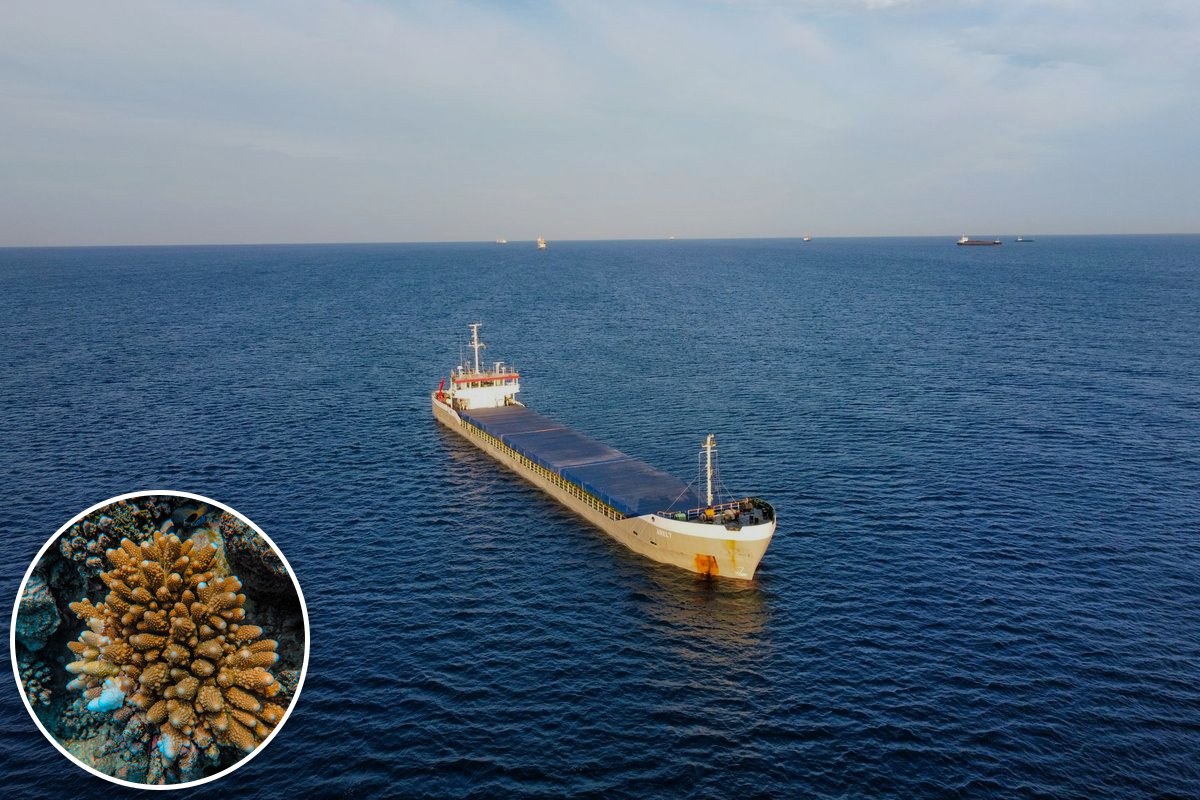
The Port of Townsville will resume maintenance dredging of its main shipping channels and harbour from Wednesday (4 November) for 10 days, and place the sediment at sea about 6 kilometres off Magnetic Island's Florence Bay, ABC News reported. The timing, within days of the expected mass spawning of inshore corals, has Magnetic Island residents concerned that poor water quality will compromise local reef reproduction.
The port told the ABC it had voluntarily planned for no dredging during the main predicted spawning window in October as a precaution. The placement area in Cleveland Bay, between Townsville and Magnetic Island, is excised from the Great Barrier Reef Marine Park and has been an approved disposal site for decades, the ABC reported.
Port Says Dredging Is Essential
"Maintenance dredging is an essential and routine activity that supports the safe movement of vessels, which is a statutory responsibility for the port," a port spokesperson said.
"The dredging program is being undertaken some kilometres from sensitive coral reef habitats, and environmental modelling does not predict impacts on those reefs."
The spokesperson said the port had carried out maintenance dredging and sea placement at this time of year before, most recently in 2024.
The port's frequently asked questions page says annual maintenance dredging generates approximately 450,000 cubic metres of material, most of which is placed in a designated Dredge Material Placement Area in Cleveland Bay. It says the site was chosen in 1993, sits in approximately 12 to 16 metres of water, and that sea placement is currently the most practical and feasible option given the fine-grained sediment and the volume removed each year. The page lists alternatives the port has assessed, including land placement or reclamation, beach renourishment and far offshore deep-water placement.
On its dredge management page, the port says hydrodynamic modelling predicts maintenance dredging impacts will remain localised and temporary across all dredging volumes and climate conditions assessed, with no adverse impacts predicted for mapped coral habitats. It cites a 2018 BMT WBM sediment budget, peer reviewed by Dr Andy Symonds, which found maintenance dredging contributes the equivalent of 2.9% of the annual natural resuspension at Townsville. The page says a draft Long-Term Maintenance Dredging Management Plan for 2027 to 2037 is out for consultation and will support the port's application for a 10-year sea dumping permit.
Coral Spawning and Reef Recovery
James Cook University coral ecologist Andrew Baird told the ABC that Queensland inshore reefs were expected to begin spawning within days.
"Coral spawning is a very important part of reef recovery," Professor Baird said. "If reefs get disturbed, the main source of recovery will be sexual recruits from the coral spawning."
Australian Institute of Marine Science coral ecologist Katharina Fabricius said coral larvae were sensitive to poor water quality well after the initial spawning.
"They are looking for clean reef surfaces and that could be up to two weeks after the spawning event, sometimes longer," she said. "Any type of silt and sediment is affecting coral spawning, no matter where it comes from."
Magnetic Island Residents
Diving instructor Chad Bertram, who lives on the island and runs a scuba and snorkel business there, said dredge spoil muddied the local waters and feared it could have long-term implications for the reefs, particularly during coral spawning.
"Easterly winds and the currents that we do have generally brings [the spoil] to the shores of Magnetic Island and on our fringing reefs," he said.
Gethin Morgan, who leads the Magnetic Island Nature Care Association, has spent years raising concern about the port dumping spoil at sea.
"It is a real shock to hear that they are going to do dredging and dumping in the middle of the spawning season," Mr Morgan said. "We all know that October and November are months in which corals spawn, and they can also be very windy months."
In ABC reporting from September 2025, Mr Morgan said the group wanted the material dumped in deeper water once proper modelling was done. Andy Lewis, executive director of the not-for-profit Coral Sea Foundation, told the ABC at the time that the reefs around the island were in good condition and adapted to living in a high sediment environment, while saying there was "no doubt that the dredging is increasing sediment load in the water".