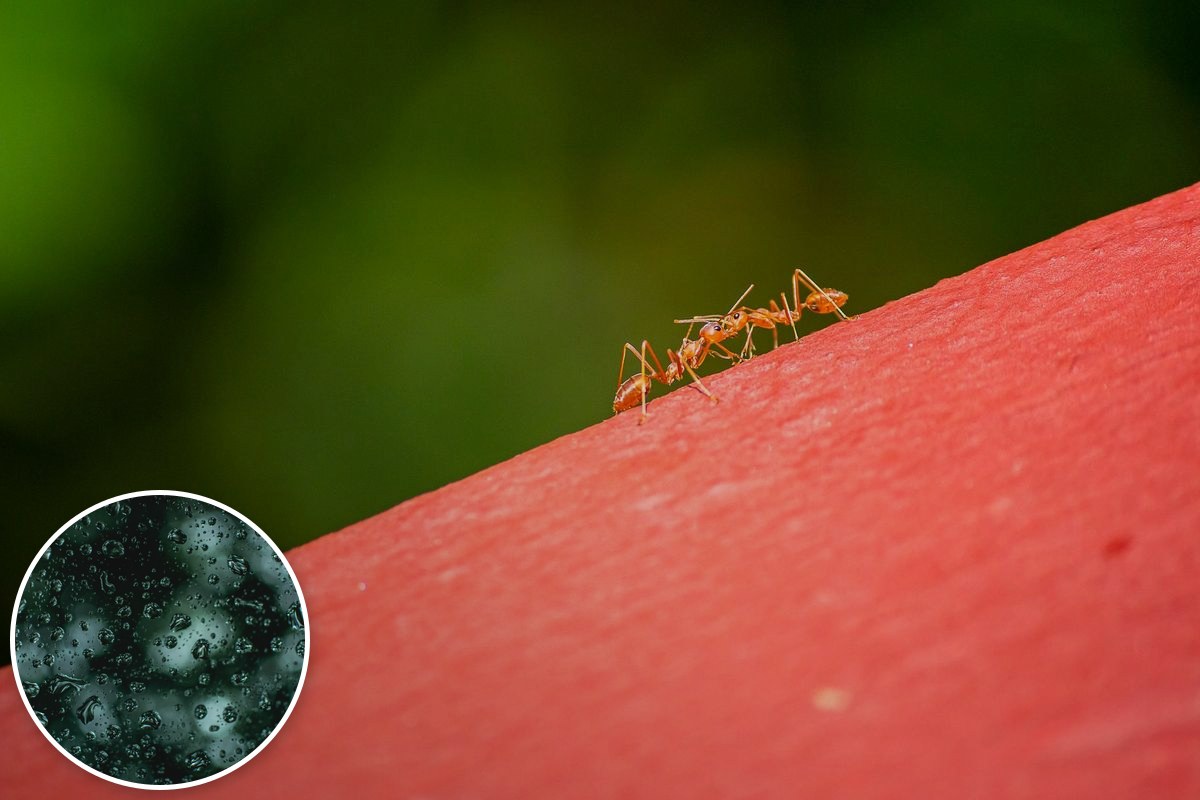
The National Fire Ant Eradication Program (NFAEP) is urging Queenslanders to watch for fire ant rafts in swollen waterways as the wet season ramps up, ABC News reported. Invasive fire ants have infested about 850,000 hectares across south-east Queensland and northern New South Wales, the ABC reported.
NFAEP general manager of operations Marni Manning said heavy rains and swollen waterways can see the ants "join together" in a rafting configuration for survival.
"The raft is designed to do things like share oxygen, protect the queen and any young, and move themselves to a safer spot," Ms Manning said.
Last Resort Raft
Ms Manning said fire ants are particularly dangerous in the "last resort" raft configuration.
"Because it is a last resort and therefore it is completely in colony-survival mode, they also increase their toxicity at this time," she said.
"It is very dangerous for people to handle a fire ant nest in water or to handle it when [a raft] has hit the side of a riverbank, because they will latch onto anything they possible can to actually get out of that rafting and the weather and the water."
She urged anyone coming across a nest or raft to exercise caution. "We ask people if they do disturb a nest, stay well back from it because they can come out at such a rate and they will continue to attack whatever has threatened or disturbed the nest," she said.
"That's where young children or older people who may not be able to move as quickly, or domestic pets and livestock, can become particularly vulnerable."
Multiple Queens
Griffith University PhD candidate Cassidy Winter said the unique nature of fire ant nests made the rafting behaviour particularly threatening.
"One of the more unique things about fire ants is they will quite frequently have multiple queens in a single colony," Mr Winter said. He said rafting was not entirely unique to fire ants but the additional queens posed challenges to containment.
"Because of the multi-queen colony thing that they have, they're very easily able to split off and form multiple colonies from the one colony if they raft away," he said.
Containment Zone
The NFAEP biosecurity zone map covers Brisbane, Logan and Ipswich, and reaches as far north as the Sunshine Coast and into northern New South Wales, the ABC reported. Ms Manning called fire ants "a stand-out in a dirty group of alien invasive species" and said eradication efforts were on track.
"We have contained it to the south-east corner, and that is an absolute precursor for successful eradication," she said. "So we have everything on track."
Mr Winter said various metrics supported the Queensland government's claims eradication was working. "Even just holding steady for the fire ant containment zone is a massive accomplishment," he said, while adding: "It's going to be very, very difficult to eradicate each of those colonies and stop other groups of fire ants from moving into those now unoccupied areas."
Localised Spread
The program's own guidance on rafting and tunnelling says rafting increases risk in flood-prone areas like South East Queensland through the storm season, but because it is a last-resort survival method, flooding and rain do not pose a significant risk of spreading fire ants over large distances. It says nests can spread short distances locally and show up in new areas on a property, especially after heavy rain or floods.
That matches a 2024 Austral Entomology paper by authors from the National Fire Ant Eradication Program, which examined the 2011 flood of the Brisbane River and the 2017 flood of the Logan–Albert River. It found flooding did not spread the ants beyond the known boundaries of infestation but contributed to localised spread, particularly at sites with multiple-queen infestations, and warned this could change if the ant spreads to new river catchments.
Report Rafting
On Wednesday (28 October) the program said recent wet weather across South East Queensland had created ideal conditions for fire ants, and that its call centre had received an increase in calls and reports. It said a single queen can fly up to 5 km before starting a colony and can lay up to 5,000 eggs per day, and that ants often build nests higher above the ground after rain, making them easier to detect.
The program asks people to report rafting and suspect ants or nests online or by calling 132 ANT (13 22 68) within 24 hours. "We really need your help. We do not want this in Australia," Ms Manning said.