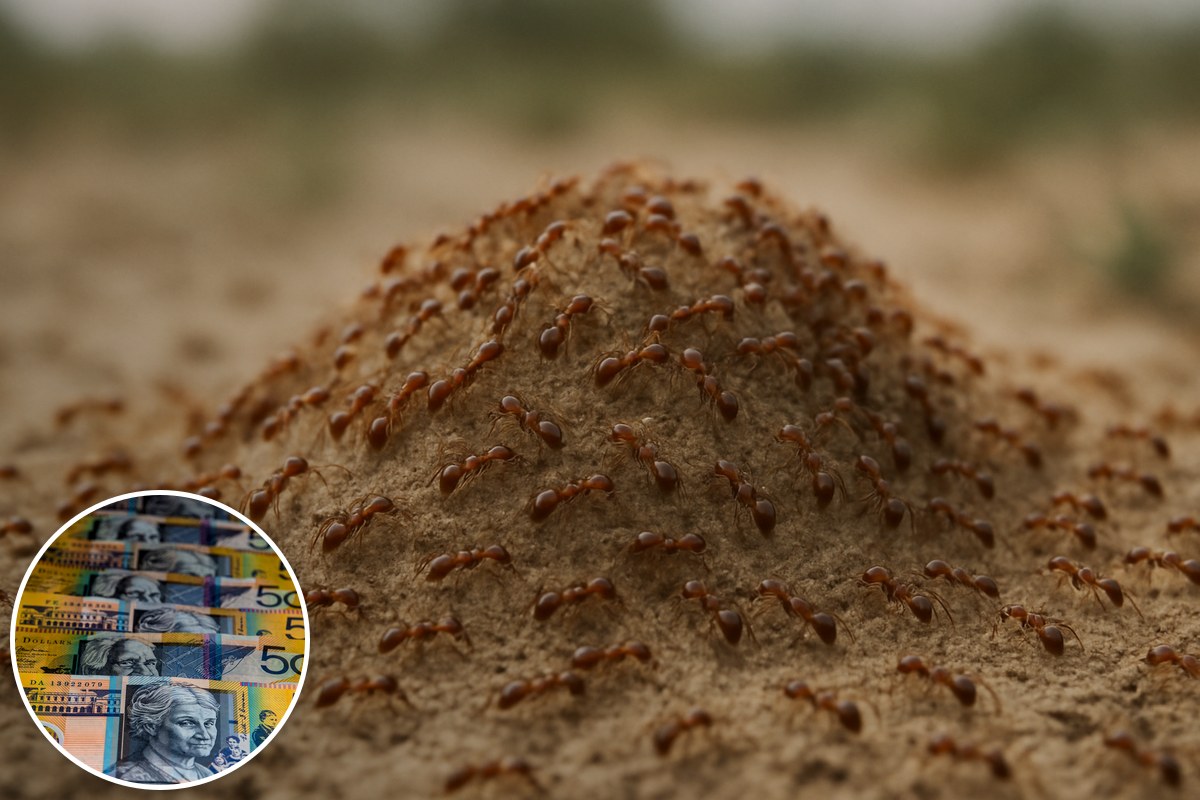
Australia's war on fire ants — fought hardest in the suburbs of Brisbane, Logan and Ipswich — is approaching a funding cliff. Money for the current national eradication plan expires in June 2027, and on Friday state and federal agriculture ministers met to consider its successor, the National Red Imported Fire Ant Eradication Program Response Plan 2027–32. Their verdict on eradication: still "technically feasible, cost beneficial and in the national interest". Their commitment: to consult their governments on funding and reconvene for a final decision before next year's budget.
For the advocates who have watched this cycle before, that is the dangerous part. Invasive Species Council advocacy director Reece Pianta said the program's funding track record was "pretty scary" — and pointed to what happened the last time the money gapped, in 2023. "What that resulted in was about a 40 per cent increase in the fire ant infestation zone. It grew from around 600,000 hectares to about 850,000," he said. In the council's response to Friday's meeting — which noted ministers agreed to seek funding in the coming 2027–28 Budget — he put it plainly: "Agriculture ministers have done their job. Now it is time for treasurers and premiers to step up and fund the plan."
The frustration is sharpened by the fact the program is finally winning. Mr Pianta said the fight was seeing a "turning of the tide": "We've seen 208,000 hectares, an area almost the size of the ACT, transition from the suppression zone into active eradication. Fire ants removed from the Murray-Darling Basin in northern New South Wales, no new nests detected in central Queensland." The council's modelling puts the cost of finishing the job at $1 billion over five years — against its estimate of more than $2 billion in economic damage every year if the ants get out of control. "For our treasurers and finance ministers around the country, the cost-benefit analysis is clearly in favour of paying to complete eradication right now," he said.
Queensland, where the infestation is centred, has already moved. Primary Industries Minister Tony Perrett — who presented the consequences of wider spread to Friday's meeting — told state parliament in June that fire ants remained "one of Australia's most significant biosecurity threats" as he announced $10.5 million in state suppression funding for 2026–27. "Sugarcane, nursery, turf and hay know that fire ants threaten their industries, and more broadly agricultural production, regional economies, and our way of life," he said, calling on the federal government and cost-share partners to include suppression in the next response plan.
The mechanics of the fight are strangely delicate for a war measured in hundreds of thousands of hectares. The National Fire Ant Eradication Program works by lacing corn grit with an insect growth inhibitor, which worker ants carry down to the queen; the bait stunts her, she stops producing workers, and the colony collapses. The program treats every property in a rolling "eradication area" — a band around the suppression zone covering a large corner of south-east Queensland, including Brisbane — up to six times over two years, then contracts the band toward the city and the coast, monitoring treated areas for five years afterwards.
The biosecurity zone already stretches from the Sunshine Coast to northern New South Wales, with isolated hotspots across the south-east, and strict rules on moving soil, hay and other materials out of it. Residents outside the formal eradication band who find fire ants can work with the Fire Ant Suppression Taskforce to treat them.
What happens next comes down to a line item. Ministers have agreed the ants can still be beaten; the plan exists; the community, as Mr Pianta puts it, is backing a "responsible program in the field". Whether the 2027–32 plan is funded before the current money runs dry in June — or whether Australia repeats 2023 — now sits with the country's treasurers.